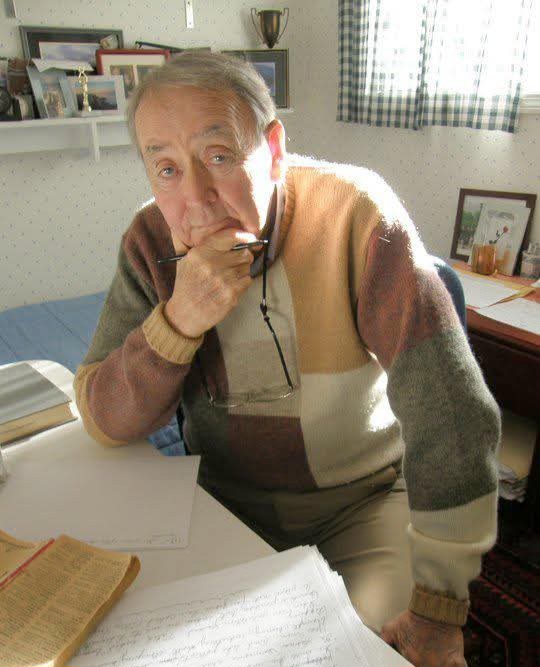
By Sarah E. Murphy
No one prepares you for the transition from Daddy’s Girl to Fatherless Daughter.
Ten years ago, you left us on September 27. The day fell on a Sunday, and as I awoke, I found myself trapped in W.H. Auden’s poem, desperate to stop all the clocks – and the sound of a bouncing basketball at the Heights court – as life went on around us.
I’ll never forget how comforting it was to see Erin Glynn walking up the brick path that morning, carrying a brown bag of Cape Cod Bagels and tubs of cream cheese.
Sustenance for our very first meal without you.
So much has changed since then. I no longer recognize my country, my hometown, even my neighborhood. Not just the Falmouth Heights of childhood, where Mom still lives in our beloved home, but across the harbor, in my husbands’ grandparents’ cottage in Belvidere Plains, my home for over 20 years. Both once quintessentially Cape Cod, forever changed and tainted by greed and entitlement.
I feel like I’m living in “The Green Box,” the memoir of your Newton childhood, which we published together, set against the backdrop of World War II and the life lessons you learned at Boyd Park.
As I write, all I hear is the relentless din of construction while a bigger and “better” summer house is being built for our part-time neighbors who are here for a few weeks out of the year. My little street is a construction zone until at least March 2027, per the letter from the builder. Working from home is now impossible, and I recall with envy the quiet rooms of your own you retreated to in our family home. I turn up WFCC, but Debusssy is no match for the cacophony of grinding metal.
As your anniversary approached, I felt the need to appropriately commemorate the day, similar to the pressure that comes with every New Year’s Eve, a holiday we hated, mainly because we lost Papa Murphy on that night in 1983.
Somehow, ten years without you feels so different than nine. Milestones are like that.
There’s so much you’ve missed, family members you’ve never met, accomplishments I long to share, along with past traumas and fears about my future.
Last year on September 27, Chris brought me to Mass Maritime, so I could walk in your footsteps, thinking of all the cadets whose lives you impacted as a professor of English, public speaking, and creative writing, while also establishing the school’s first theatre group, the Maritime Players.
Just the other day, I found a photo of you and the MMA cast of “Charley’s Aunt,” remembering watching from the back row that night a quarter century ago. I couldn’t help but wonder where those people are today and what memories of you they carry. How you did for them what you did for everyone – helped them see and believe in their potential.

The Maritime Players
It’s hard to imagine how many weddings and funerals have been touched by your compassion, wisdom, and humor any time a former public speaking student takes command of a room to celebrate a loved one or address a large gathering with a raised glass.
This year on that dreaded day, I again tried my best to shift my grief to gratitude, while also letting the two co-exist, thinking of the legacy you have left behind, which is so desperately needed in this divisive country unapologetically run by racist, sexist, xenophobic white men.
As a young junior high school teacher and theatre director in Natick, who heard antisemitic remarks and sentiment within the school, you made it a teachable moment, directing your students in a production of “The Diary of Anne Frank.” It was a story you shared often with your children, recalling how it offered a powerful and tangible lesson about the Holocaust, including those who silently enabled it, and the horrors from the not-so-distant past.
If you put on that play today, you would be labeled “woke” by many Americans, undoubtedly receiving pushback from those who support a regime emboldened by ignorance, hatred, and division.
Desperate for a connection to you, I posted on the Wilson Junior High School Facebook page on September 27, asking if any of your students from Wilson or later, from Natick High School, might have some recollections to share.
Anne Hayes-Garrow was the first to respond.
“If I remember correctly, it was Mr. Murphy who had an in-class assignment to convey your thoughts at that time to others in the class. Everyone was busy writing down their thoughts, but I decided to illustrate mine. On the blackboard, I drew a head with a brain silhouette in it, partitioned it into sections, and drew a little picture in each section to represent what I was thinking about. He liked it and told the class what a creative approach it was. I was painfully shy and had low self-esteem, and that positive attention was like getting an Oscar to me.”

“Your dad was the most influential teacher I ever had, opening the door to a lifelong love of literature and a degree in English. He was my 9th grade Honors English teacher,” Jan Fialkow recalled.
Jan re-connected with you decades later, after striking up conversation with Bart and Nina, asking about the origin of the word “wicked,” when they were selling products from their company while visiting Joanna in North Carolina. Of course, it led to you.
“He said his father-in-law was Jim Murphy, and I blurted out something akin to ‘I love Jim Murphy!’
After playing several rounds of phone tag (leaving each other quotes from “The Love Song of J. Alfred Prufrock”), we had a long, wonderful conversation in which he insisted I call him Jim, not Mr. Murphy.
“I later spent a lovely afternoon with him and your mom at their house on the Cape. My 50th high school reunion was a year or two away, and he expressed interest in attending if we were receptive to the idea. Unfortunately, he passed away a few weeks before the reunion. Thinking of Jim always makes me smile.”

Marcia Sherman Perna wrote, “Your dad was my favorite teacher of all time. We came to visit him a few years before he died, with Faith Wiltenburg Augat and Emily Barkin. He was just as funny and delightful as he was years ago, in 1963, as our 9th grade English teacher and Drama Club leader at Wilson Junior High. I remember everything we read in his class and what a wonderful teacher he was.
“I first met him when I was in 8th grade, and he cast me as Miep in a production of “The Diary of Anne Frank” for Drama Club. I still think of him and his class often.”
I was there for that visit with you and Mom and I took this photo, but there were so many enthusiastic conversations going on that afternoon, I don’t think I realized Marcia was part of that important school production I grew up hearing about.

“He was my favorite, too. (I didn’t know he had a first name!) He was always entertaining in class even when he was being “strict.” I never felt dumb asking the simplest questions because he treated us so respectfully, unlike some of the other teachers,” recalled Tanya Adams.
Nancy Winkler was a member of NHS Class of 1970.
“Mr. Murphy was my favorite teacher. Loved his class. He was wonderful!”
“I’m delighted you reached out, Sarah,” wrote Paula Carroll Cohen. “Your dad was such an exemplary teacher, a true treasure, and one of the very best teachers I ever had. At Wilson, in 1963-64, I learned so much from him, developed a love for reading and writing, and originally went to college to be an English teacher, thanks to your dad and later John Harrington at NHS.
“I visited your dad at the high school when I was in college and years later became an editor, then a social studies teacher at Wilson.”
Paula reconnected with you when Ted was giving an author talk, and unsurprisingly, you were there to support him.
“I once went to a presentation at the Natick Public Library by your brother, back when he was a burgeoning author. At the time, your father was new to teaching night courses at Boston College. I was thrilled to meet up with him. I had the chance to reminisce, thank him, and tell him what a tremendous influence he was in my life.
Years ago, I unearthed my long-lost junior high diary; one page said, ‘I love Mr. Murphy! Not in a ‘crushy’ way!’”
She used the hysterically crying emoji, which made me laugh, too.
“I often flash on my year with Jim Murphy. I was so blessed to have your dad in my life!”
Alix Campbell touched on so many things I often ponder in this age where writing is even more undervalued than ever before. I remember how you validated my work and craft every time I walked through your office door, twenty years ago when I was trying to carve out a creative career. From the time I was a child, you were the one who always reminded me I’m a writer.
“Whenever asked if I felt any inspiration from school teachers, Mr. Murphy is screamed from the bottom of my heart. Insecure in my writing skills, Mr. Murphy assured me I was no slouch. He showed the beauty in my words and encouraged me just to let emotions take hold to turn a phrase. He taught more than English and creative writing; he unlocked potential in so many of us. The in-class exercises to describe a classmate or event always exposed a gem in our midst, sheepish grins all around. As my college evolved to art school to photography to life in general, Mr. Murphy has always been over my shoulder, suggesting, ‘Is that all you can say, all that you see?’ I bet he would have strong words about the AI function to ‘help me write!’ I can hear him say, “Use your own thoughts!!!”
Thank you for your post, Sarah. He was a keeper.”
Willy Welch was a student in the ninth grade Honors English/History class you and Victor Lister taught together, in 1966-67 and, long before the Mass Maritime production, you directed him in “Charley’s Aunt,” along with future Tony award-winner William Finn as Charley.
“Your dad was my favorite teacher ever! He was my inspiration to become the actor and writer I’ve become. He made me love Shakespeare,” he wrote.
He also recalled the Monday night meetings that were part of that class, in which parents participated with a guest speaker.
“My dad brought a colleague from Harvard, Banesh Hoffman, a physicist who worked with Einstein.”
I think I came across the letter to which Willy refers, as some of his and the memories from these now adults are familiar, but I’m so grateful to hear from their perspective.
“I finally found him again in 2000 (it’s not easy finding a Jim Murphy in Massachusetts when you live in Texas), and we corresponded for a while after I wrote to thank him for his influence on me. I read his novels then and really enjoyed them.
Also, I named my dog after him back in 1967. My beagle was named ‘Mr. Murphy,’ which I still think is a great name for a dog. Jim used to write notes to him. ‘Tell him I said Arf; he’ll know what I mean.’ LOL
I did indeed laugh out loud, thinking of my adorable daddy and his canine namesake. My unpretentious but erudite father, a Fulbright Scholar who taught James Joyce and also loved the TV show, Alf.
I can hear him “laughing like hell” from Heaven at all of this.
Paula Cohen responded:
“Willy Welch, I totally agree; Jim Murphy was magical and so inspiring!”
On September 27, I drove around the Heights hill for the first time since May, the longest I’ve ever gone in my 53 years without taking that route. I was able to spend some time with Mom, Courtney, and Seton in the backyard at 36 Grand Ave, and that night, Chris and I watched Jeremiah Johnson. It was the first time I had ever seen it, in honor of your nickname for Chris, and the time I told you he was going camping in Brewster. The three of us “laughed like hell” about that many times over the years, and it made me smile when I discovered it came out in 1972, the year I was born.
After you died, Mom gave me a clipping from the Natick High School newspaper, in an old plastic Chrismas Tree Shops frame, announcing your new position in Sandwich, the job that brought us to the Cape and our new life. On the back is a little card with a verse from the Book of Psalms. You know I’m not religious, but it resonates with me on a different level.
“Thank you for my personality and abilities, which are all wonderful gifts from you.”


 Falmouth Style
Leave a comment